Empowerment Therapy Institute

Sharing how we empower others
to build more fulfilling lives.

Practitioners Worldwide
Australia Canada China Colombia Czech Republic Germany Honduras India Kenya Mexico Spain Tanzania The Netherlands Ukraine United States

The Problem

Relationship conflicts, financial insecurity, and the state of the world — climate change, war, A.I. job displacement — frequently lead people to anguish and despair. Unfortunately, in many parts of the world support services are either not affordable or outright unavailable.

Empowerment Therapy is an accompaniment model that concerned individuals who want to help can learn and apply.

Empowerment Therapy is for those of us who want to accompany others on the journey towards equilibrium, wholeness, and connection with their authentic self.

Empowerment Practitioners aid people to not only navigate current challenges, but also build more fulfilling relationships and thriving lives.

What We Are Doing

We are training Empowerment Practitioners in 15 countries and three continents, thus far.

Our students have forged a close-knit, global community:

  • They support one another in difficult times.
  • We host an Empathy Cafe — a weekly group where students listen to one another empathically, building resilience.

We keep Empowerment Therapy training within reach for anyone called to it:

  • Fees are comparatively low — $30–$50 USD per month, based on ability to pay.
  • Partial scholarships are available, so cost is never a barrier.
  • No one is turned away for lack of financial resources.

We offer training in two complementary formats:

  • Weekly online sessions, greatly expanding access.
  • In-person, 4-day, immersive workshops in Mexico, India, and anywhere we are invited.

Structured, evidence-informed curriculum integrating Nonviolent Communication and Client-Centered Therapy.

The model incorporates 30 years of practical experience in community mental health settings.

It includes such topics as:

  • Step-by-step processes to transform anger, guilt, shame, fear, and conflict in relationships.
  • Liberating Role Plays, a highly effective, healing and empowering process to be used with groups, thus increasing access significantly.
  • Skills to foster clients' autonomy, resilience and agency.

It combines conceptual and experiential learning within a collaborative paradigm.

Our goal is to establish sustainable partnerships with local communities in underserved regions, systematically expanding access to care by:

  • Building relationships of trust with community leaders.
  • Assessing needs and co-designing programs with local residents.
  • Training local practitioners to provide empowerment services within their communities to ensure language and cultural competence.
  • Emphasizing group (v. individual) work for expanded access, reduced cost, and community building.
  • Training program participants to teach empowerment skills to their children to increase impact for generations to come.

What is Empowerment Therapy?

Marshall Rosenberg

Marshall Rosenberg

Nonviolent Communication

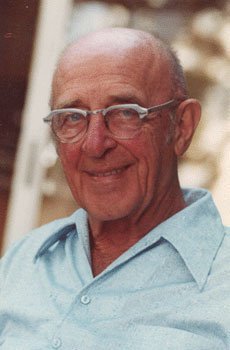
Carl Rogers

Carl Rogers

Client Centered Therapy

Empowerment Therapy

Healing · Liberation · Empowerment

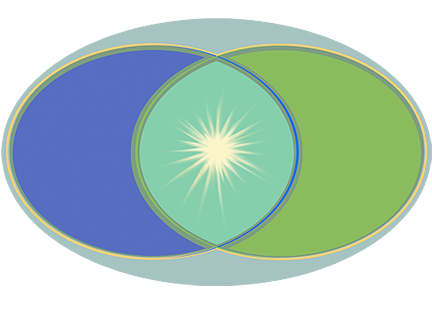
Grounded in the work of Marshall Rosenberg and Carl Rogers, Empowerment Therapy is founded on the fulfillment of universal human needs. The underlying principle is that when our needs are met, we feel and do well.

Why this is harder than it looks

Most people seek help because they have unmet needs that they struggle to identify and express. They may experience malaise, but can only account for it in general terms.

“My teenage son doesn’t listen.” “My partner is distant.” “I’m unhappy at my job.”

Even when they can transform cognitive distortions, they are not necessarily able to identify their needs and ask for what they want. The reason for this has to do with early disconnection from needs compounded with self-judgment and what Carl Rogers calls “conditions of worth” — internalized rules that dictate how a person must behave to receive love and acceptance. These conditions connect self-worth to external validation rather than intrinsic value, leading to low self-esteem, pleasing others at one’s own expense, and lack of authentic connection to self and others. Trauma and domination systems further limit their ability to build fulfilling lives.

Thus, our work has three aims: healing, liberation and empowerment. Beyond symptom reduction, we help people to be happy and thrive.

Who is this for?
For Therapists

A practice grounded in the relationship.

Mental health professionals find in Empowerment Therapy a coherent model that integrates Nonviolent Communication and Client Centered Therapy. The framework offers comprehensive guidelines to build the therapeutic alliance — what we know, from research, is the most important aspect of healing work.

For Coaches and Helpers

Skills that meet people where they are.

If you already work with people in caring or helping roles, Empowerment Therapy gives you a structured way to deepen your practice. You will learn to identify needs beneath the words, hold space for transformation, and support clients in building autonomy, resilience, and agency.

For Anyone Called to This Work

No mental health background required.

This program is open to anyone who wants to learn to accompany others in their journey of healing, growth and fulfillment. We develop practitioners who go out in the world and offer support to people without access to traditional services.

Throughout the program, we foster the personal development of participants in the safety of a close-knit learning community. At the end of the course, participants often report deeper self-connection, increased self-acceptance, and more self-confidence.

The path is rigorous, but it begins with one quality: the desire to help.

Ready to begin? Request an orientation session — a 45-minute
conversation to see if this is the right fit.

What Our Students Say

Rev. Lindsey Turner
"Empowerment Therapy enables me to approach my clients with a level of sensitivity and close-to-home quality that helps them feel seen, heard, and at ease right away."

— Rev. Lindsey Turner, United States

Mukul S Gulati
"Empowerment Therapy has roots in Myra's quiet, steady presence. Being in her circle is like being gently held while I learn to hold the parents and children with whom I work with the same love."

— Mukul S Gulati, India

Cynthia Koskiewicz
"Empowerment Therapy helps you to get out of your 'head space' and grounded into the power of your heart."

— Cynthia Koskiewicz, LCPC, CADC, United States

Neve Cherry
"The course has helped me deepen empathy and connect with clients reliably. I have learned new therapeutic concepts and tools. And I enjoy the group itself — a small community of people who want to help others."

— Neve Cherry, United Kingdom

Frequently Asked Questions

How was Empowerment Therapy developed?

I, Myra Walden, developed the model based on my own experience as a client in therapy with a Client Centered therapist, Dr. Marge Witty, my never-ending study of the human psyche, and over 30 years of practicing psychotherapy in community mental health centers and private practice. In 1998, I started studying Nonviolent Communication and began to incorporate the concepts into my life and therapy practice. In 2021, I codified my experience and developed a coherent therapy model. We will need research to demonstrate its effectiveness, gain credibility and broaden usage in the field. Below is my testimonial.

I was 28 years old. At a gathering of friends, each of us was to answer the question, “Where do you see yourself in 10 years?”

Myra: “I see myself divorced.”

Friend: “Myra, but you’re not even dating!”

No, I wasn’t dating at the time, but I knew that if I were to get married, no one would put up with my temper for very long. My anger and reactivity were an aftereffect of the many years of severe lack of safety and respect I went through as a teenager that resulted in self-loathing and troubled relationships. As it turns out, I did not divorce.

At age 33, I sought psychotherapy and pursued my healing in earnest. The work bore fruit. My beloved late husband of 35 years, Peter, saw me through the angry stage, and we built a relationship of connection, closeness, and communion. Many of my dreams have come true: to have very close friends, to become a therapist, a goal I conceived at age 12 and pursued at 30; to give workshops for mental health professionals and write a book to share what I’ve learned, and more. In 2024, six years after Peter died, I met and married Kerry, a bright and loving man I adore.

There are multiple factors that contributed to these outcomes, not the least of which were receiving nondirective therapy and finding a needs-based compass to guide me in building a fulfilling life. And that’s what I want to share with others.
Is the Empowerment Therapy certification program just for therapists?

No. It is for mental health professionals and anyone who wants to learn to accompany others in their journey of healing, growth and fulfillment, even if they don’t have a background in mental health.

This approach is grounded on Carl Rogers’ seminal paper The Necessary and Sufficient Conditions of Therapeutic Personality Change. In it, Rogers describes the attitudes necessary to develop a therapeutic relationship. And, as we understand from the research, the most important aspect of therapy is the relationship between the therapist and the client. ET offers comprehensive guidelines to build the therapeutic alliance. At the same time, we make it clear that our work is not a substitute for professional psychotherapy.

Begin your journey

Join a 45-minute orientation session and discover whether
Empowerment Therapy is the right fit for you.

Register for an Orientation Session

Complete the form below to request a 45-minute orientation meeting. This session helps both you and our team determine if the program is a good fit.

All applicants meet with our team for a 45-minute orientation. Select any times that work for you below (shown in your local timezone). Once we receive your submission, we'll reach out to confirm a specific time. If none of these slots fit, leave this blank and we'll coordinate directly.